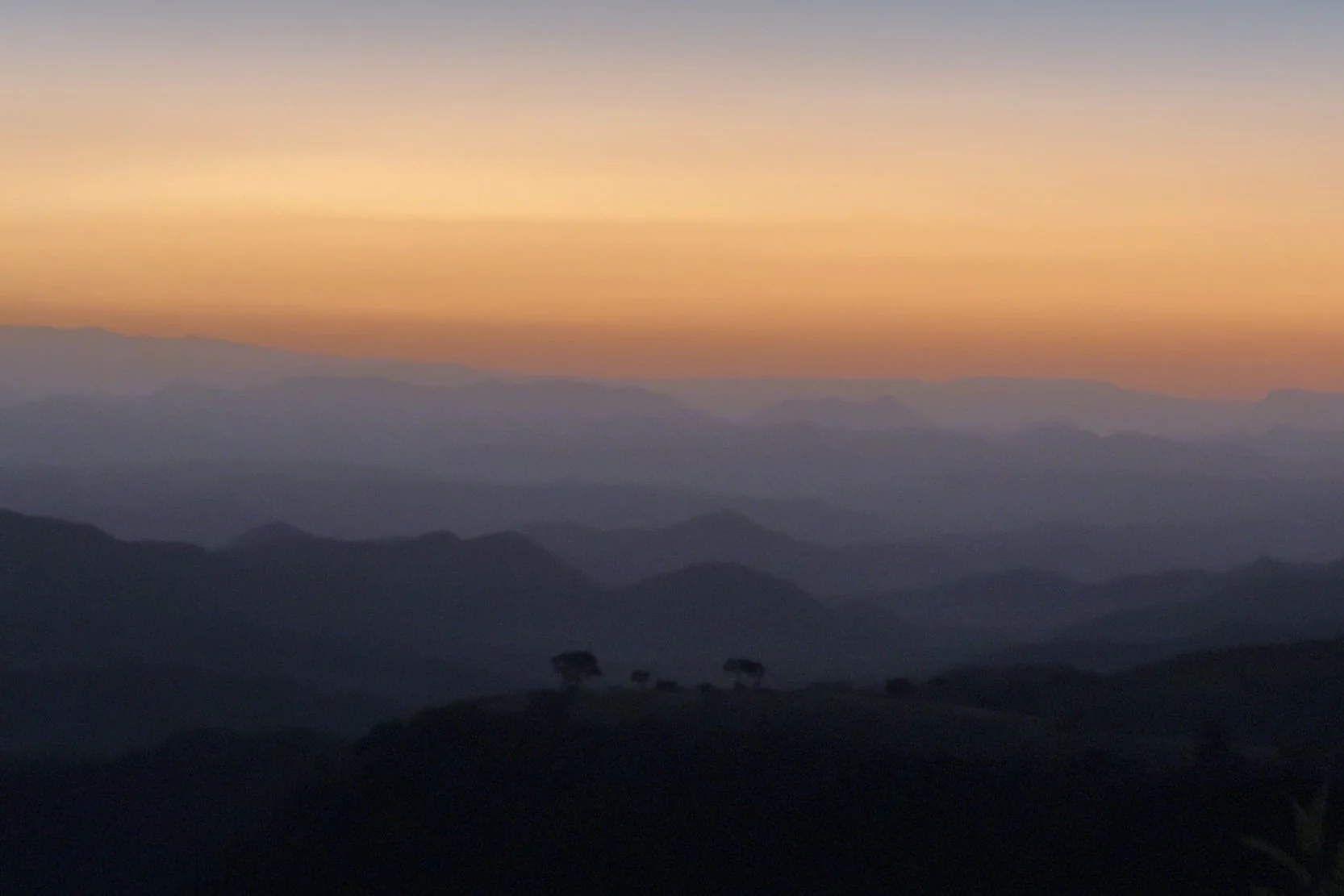
Between Ritual and Access: Photographing Lalibela as a Local
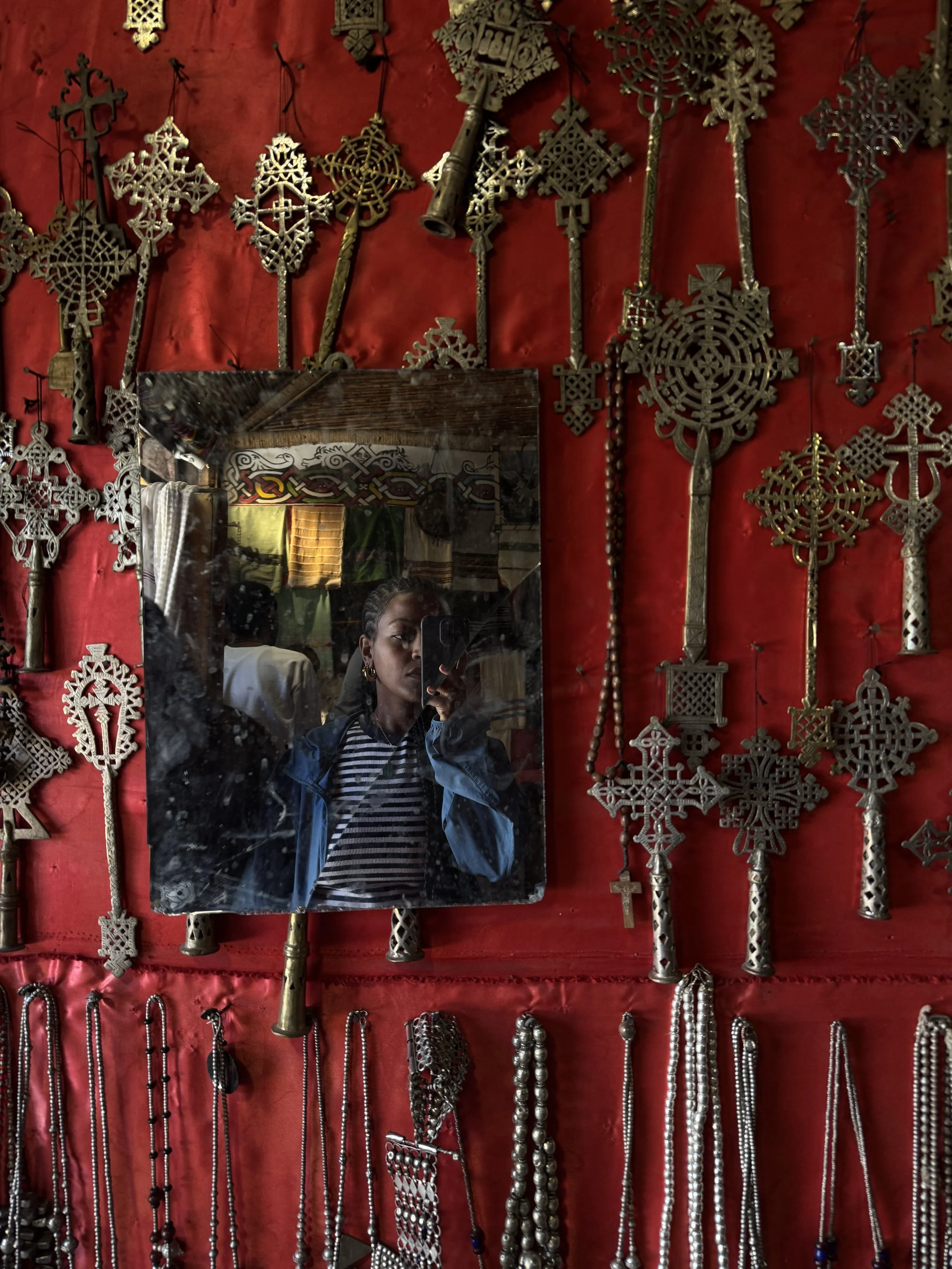
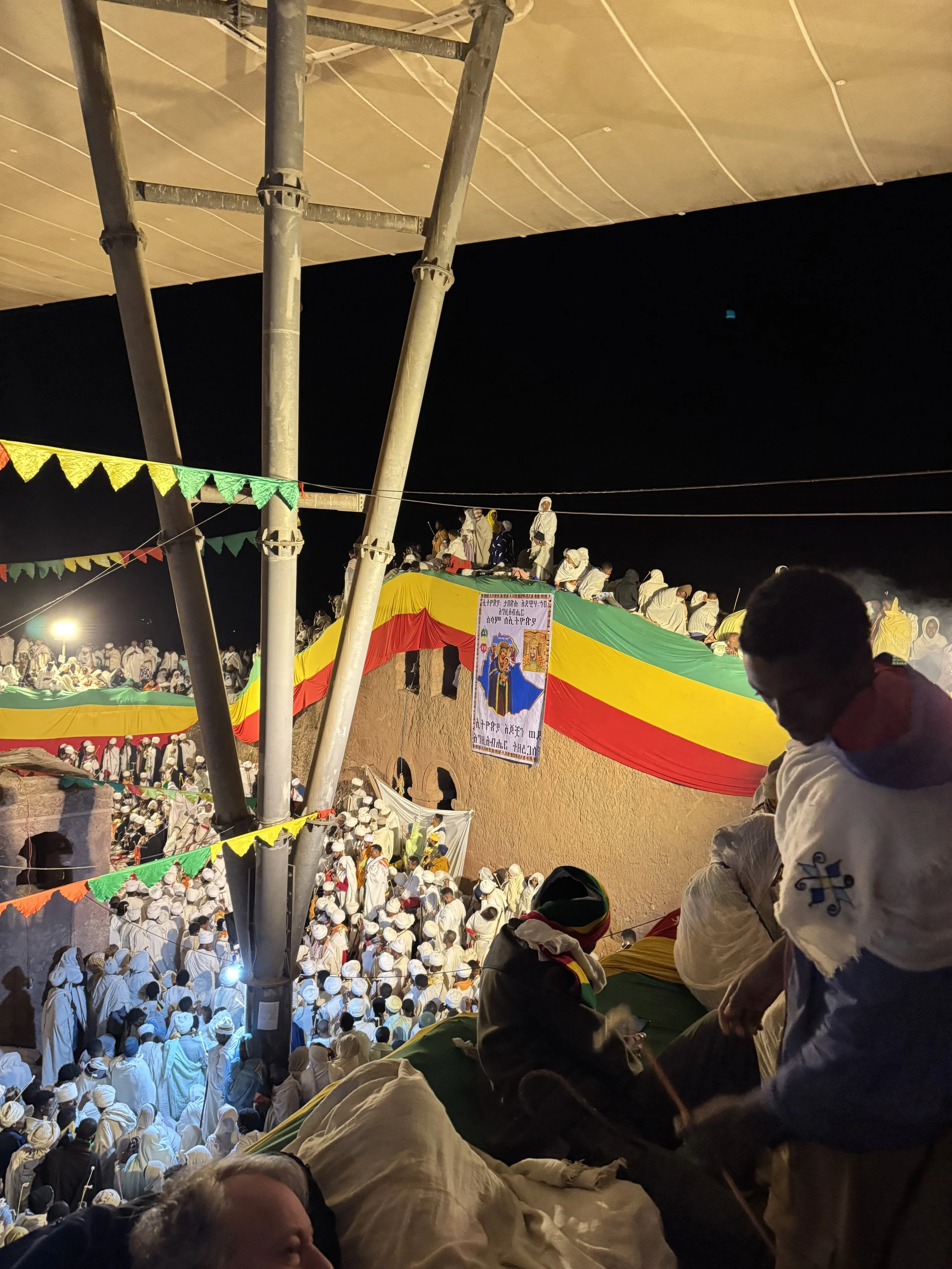
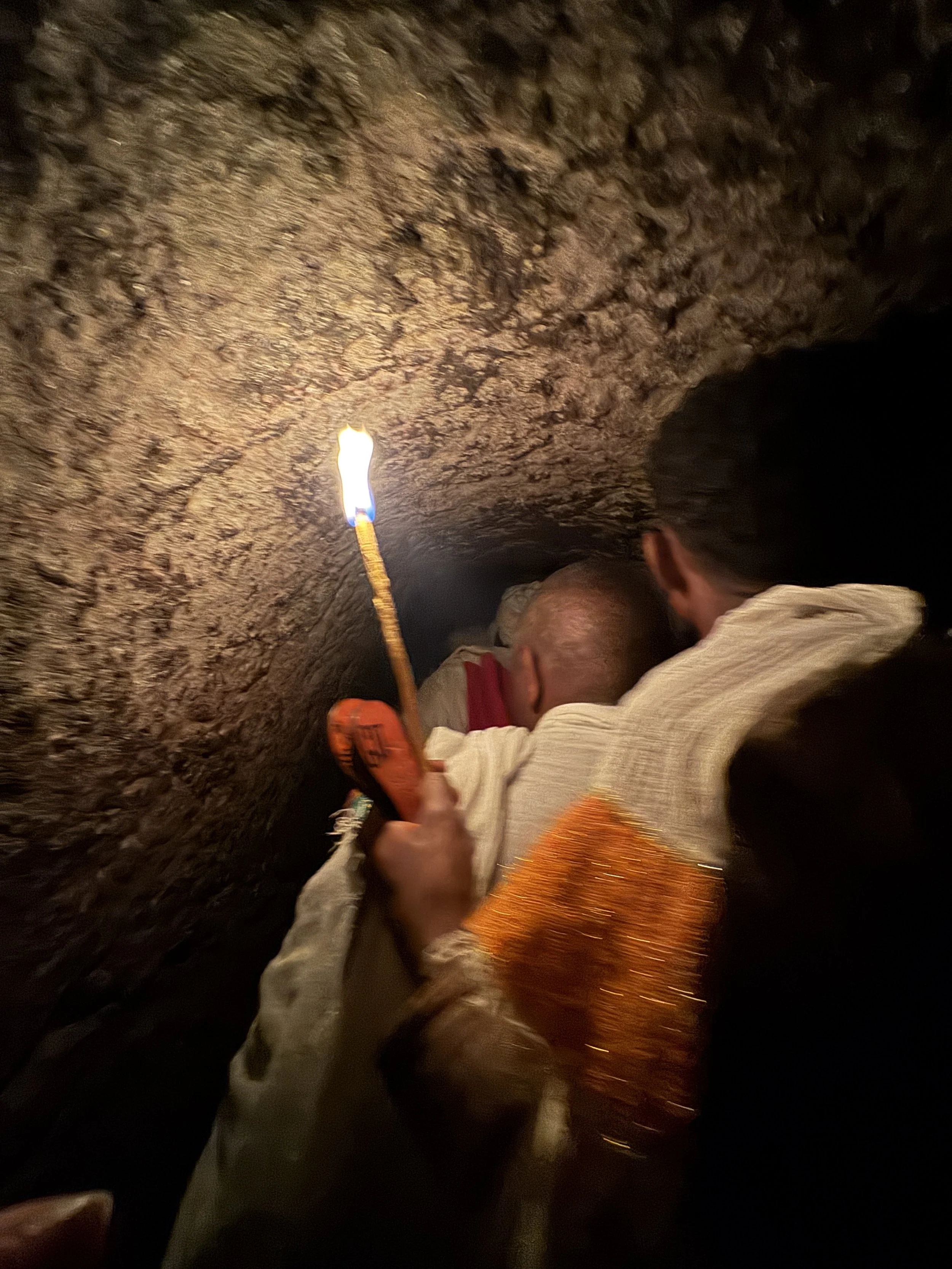
I traveled to Lalibela for Gena with my camera and a sense of responsibility that comes with photographing from within. This is a reflection on access, irony, and what it means to document your own culture while actively trying to reframe its image.
Inside and around the churches, access became a quiet negotiation. I watched tourists guided forward, offered better vantage points, spoken to with patience and respect. At the same time, Ethiopians, myself included, were asked to move repeatedly, pushed from one corner to another, sometimes spoken too sharply, sometimes physically displaced. The contrast was difficult to ignore. Photographing our own rituals, in our own country, suddenly felt like something we had to earn.
What’s striking is that this imbalance has become so familiar that, at times, we brush it off. We joke about it among ourselves. We laugh and say, “If only we were walking with a foreigner, this wouldn’t be an issue.” There’s an unspoken assumption that proximity to a foreign presence grants legitimacy—that suddenly it would be acceptable to photograph freely, whether on the streets of Addis or in other cities. Humor becomes a coping mechanism, a way to soften something that shouldn’t be normal. But the truth is, it still lingers. The joke exists because the pattern does.
At one point, after being moved again to a less visible spot, I caught myself wondering: Is it worth spending the night in there ? Is it worth trying to photograph here at all?
Not as a question about my practice or my commitment to photography—but about the cost of showing up in a space where access feels uneven, and respect feels conditional.
This isn’t about opposing foreigners photographing Ethiopia. On the contrary, photography has always been a shared language. What lingers, instead, is the irony: the foreign gaze is often trusted more easily than the local one, even when the story being told is our own.
I had experienced this before. During Timket in Gondar last year, finding a place to shoot felt nearly impossible unless you were a foreigner—or accompanying one. That pattern forces a difficult pause. Not a doubt about why we photograph, but a moment of reflection about who the space is made accessible to, and under what terms.
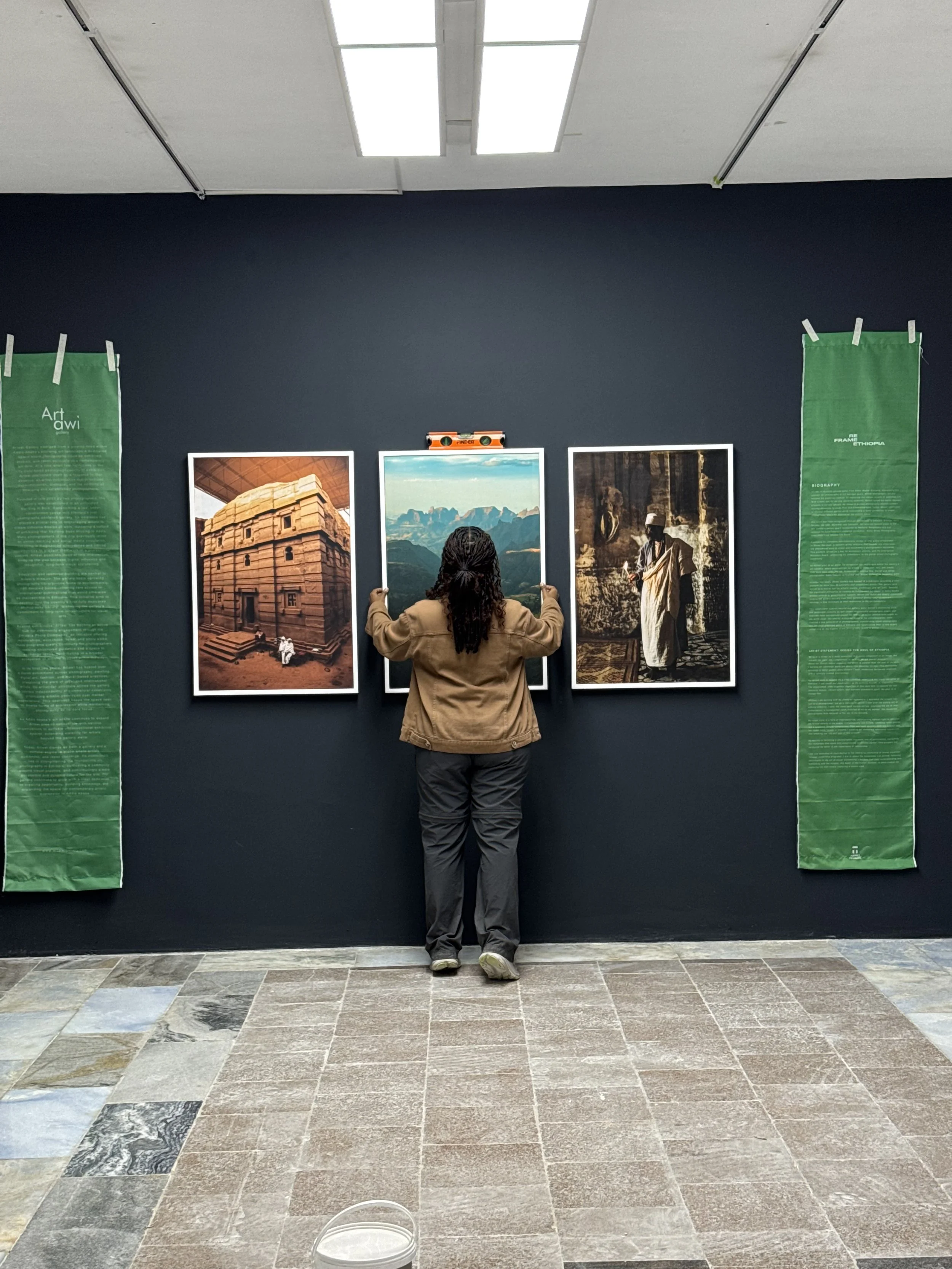
This experience echoed loudly as we opened the Reframe Ethiopia exhibition by Abinet Teshome at Artawi Gallery.
On the walls were Abinet’s photographs, images that resist the familiar visual shorthand imposed on Ethiopia for decades. No exaggerated suffering, no cinematic despair. Instead, moments of dignity, complexity, stillness, and modernity. Images that don’t explain themselves, because they don’t need to.
What stood out most during the exhibition were the conversations. Some visitors looked around and said, “This doesn’t look Ethiopian.” Others arrived assuming they already knew the country, only to realize how narrow that understanding had been. Some thought Ethiopia was one place, one mood, one story—and left knowing it never was.
That’s when it became clear to me that reframing Ethiopia isn’t only about images. It’s about mentality. Ethiopian, diaspora, and foreigner alike.
The challenge we face as local photographers is layered. Even when we are committed to telling stories with care and honesty, we often navigate systems that unconsciously prioritize the outsider. This is the unspoken difficulty behind positive storytelling—it requires persistence in spaces where visibility is uneven and authority is quietly assigned.
Still, we show up.
Because today’s moments become rituals. Rituals become culture. And culture becomes history.
Reframe Ethiopia was not an attempt to define the whole country, nor to silence other perspectives. It is an invitation—to look again, to unlearn, and to recognize that local storytellers are not only subjects of the narrative, but rightful participants in shaping it.
If this is what can be created despite the resistance—imagine what could exist if access, trust, and respect were shared more equally.
Even when we are moved aside, we remain present.
Because the story continues—and it deserves to be told from within.
Written by Sehin Tewabe, photographer and co-founder of Artawi Gallery, Addis Ababa.